Steve Edwards had the answer to last week’s trivia question:
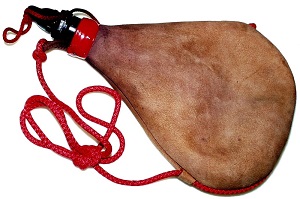
“A bota is a leather wineskin. It is kidney shaped with a cord attached that you slung around your neck and under your opposite arm so that it was easy to share with your girlfriend. Only admitted-to by people who grew up skiing in the 1960’s!”
Or in my case the early 1970’s! I’ll add some history, the bota originated in Spain where it was made of goatskin. Evergreen pitch was used to seal the seams on the inside. These original botas had to be conditioned so that the wine didn’t pick up the taste of the pitch. The modern bota is available with latex or plastic liners which require no conditioning. The spout has a cap that can be removed for filling and the cap contains a nozzle with its own stopper that is used to dispense the wine.
A bota was something to be shared so there was a proper way to drink from one. Putting your mouth directly over the spout identified you as a novice and made you the target of ridicule. So how did you drink from a bota? Well I brought one along so you could try it out.
- First hold the spout with one hand and support the bag with the other hand.
- Now tip your head back with your mouth open and lift the bota toward your mouth
- Squeeze the bag to squirt the wine into your mouth.
Whoops! You probably shouldn’t have worn that white turtle neck to try this. Well you can always wear a sweater over it. Yes, it takes a little practice to get this right.
The mark of an expert bota user was that once he or she started drinking, the bota would be moved to arms-length while still drinking! You want to try that? Just remember you’ll have to increase the pressure as you move the bota. Whoa, not that much pressure! Here’s a tissue, you’ve still got some wine on your nose. Yes, this is a lot of work to just get a drink of wine.
One of the interesting aspects of the bota being popular in the 1960s and early 70s was that wine itself was nowhere near as popular then as it is now! Of course that’s here in the United States. Back then if you could find wine in your local grocery store, it was probably of the cheap variety with very few selections. Today there are literally aisles filled with wine choices, and most are not cheap!
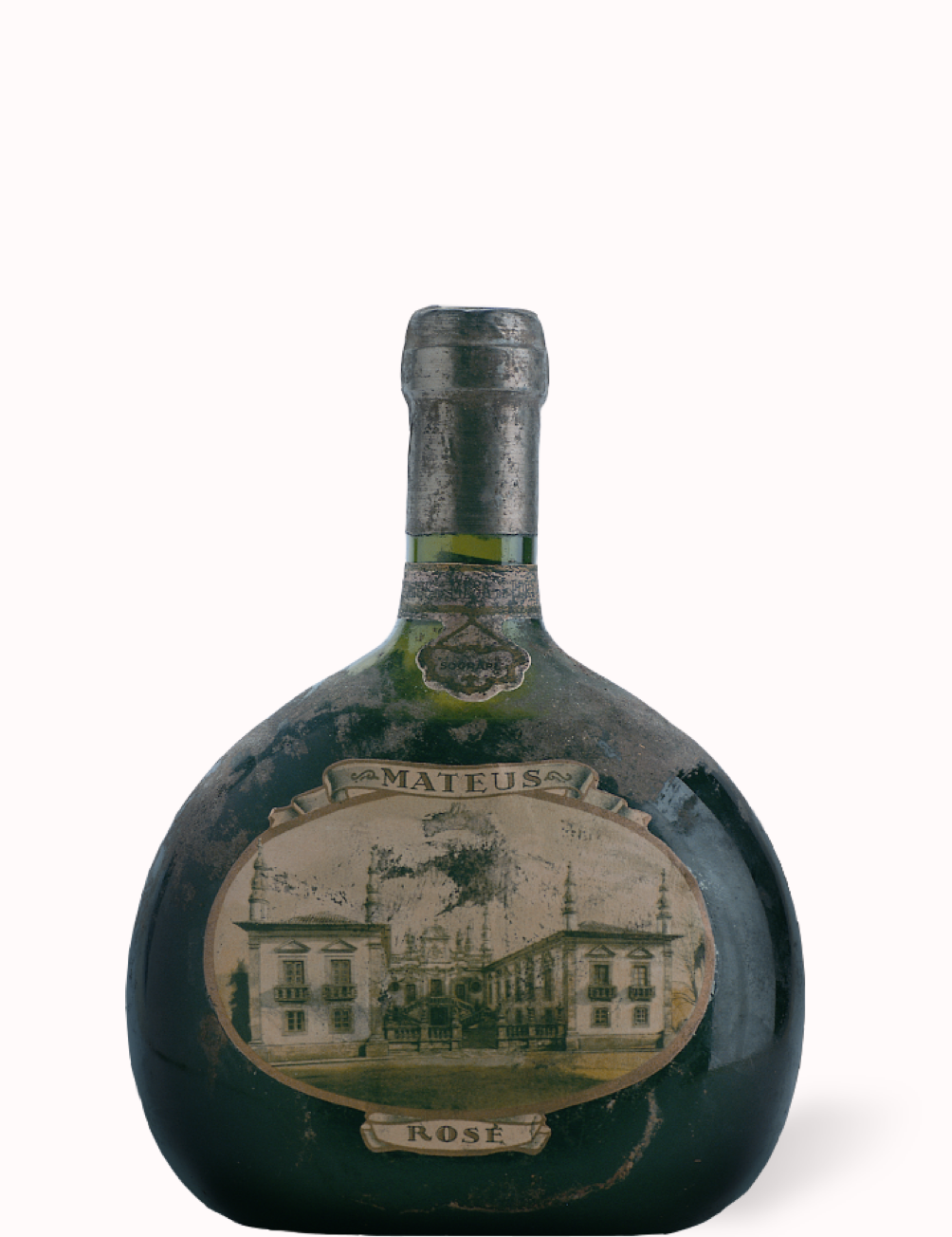
My favorite wine to put in the bota was Mateus. A Portugese wine in a Spanish bota, how cosmopolitan! Whatever happened to Mateus anyway? It was very popular in the early 70s, but I don’t see it on the shelves these days, at least not in the old distinctive bottle. I’m sure some of you remember those bottles which made great candle holders.
Do I expect to see botas making a comeback on the slopes? Probably not. People today are really choosy about the wine they drink so the whole sharing aspect would not be as popular. “Oh, it’s a New Zealand Pinot Noir? Sorry, I can’t drink that!”
However wine, or specifically champagne, is suddenly very popular on the slopes! Black Mountain in New Hampshire has led the way. They have turned their mid-slope Alpine Cabin into a European style experience serving fondue and champagne by the bottle. And not just any champagne, but Veuve Clicquot at $90 a bottle!! And it has been a success. The distributor of Veuve Clicquot says Black Mountain is their third largest customer behind two major casinos.
Just in case you think that sounds a little pricey, we’re just returning from Snowbird where the Veuve Clicquot at their Tram Bar is $150 a bottle! No, we didn’t try any.
Speaking of Black Mountain, you may remember I wrote about it early this season and the miracle Erik Mogensen is working there. I wrote about his plan to turn Black into a cooperative along the model of Mad River Glen. However earlier in March he announced a change of plans. He is buying the area and will become the owner. That includes buying back the already sold co-op shares for the area. Apparently he is really enjoying being a ski area owner!
Part of Mogensen’s decision will move his Indy Pass and Entabeni Systems companies from Colorado to the Mount Washington Valley! That will be a major impact on the area’s economy.

Leave a Reply