The 2026 Winter Olympics start this weekend in Italy. Unless I miss my bet, we’ll be hearing a lot about past Olympics and particularly the 1976 Winter Olympics which marks its 50th anniversary! Those games were held in Innsbruck, Austria. Highlights included Dorothy Hamill winning the gold in figure skating and starting a worldwide hairstyle craze; Alpine skier Rosi Mittermaier coming oh-so-close to winning 3 gold medals; and Franz Klammer winning the Downhill in his home country with probably the most famous skiing run in history! All in all a very successful Winter Olympics, but they weren’t supposed to be in Austria!
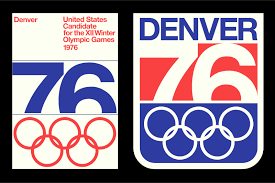
Chris Rynne had the answer to last week’s trivia question that the 1976 Winter Olympics were supposed to be in Denver, Colorado!
In the late 1960s Colorado Governor John Love formed the Denver Olympic Organizing Committee (DOOC) to prepare a bid for Denver to host the 1976 Winter Olympics. In May 1970 the IOC met to consider the bids of Denver; Sion, Switzerland; Tampere, Finland; and Vancouver, Canada. They awarded the games to Denver.
The DOOC had promoted the games as a celebration of our Nation’s 200th year and Colorado’s 100th as a state. They also claimed that they would be economical. However many of the DOOC’s ideas for keeping the games economical and local turned out to be neither. For example, their proposal was to use Denver University for the Olympic Village, but they had never discussed this with the University. Also the DOOC hadn’t realized that they would have to pay NBC several million dollars to cover the event.
This caught the attention of a couple of Colorado state legislators, Dick Lamm and Bob Johnson. They started a grass roots movement opposing any further state funding for the Olympics. They were joined by various non-government groups such as Citizen’s for Colorado’s Future and Protect Our Mountain Environment. The concerted effort forced a state ballot initiative in 1972 on further funding for the Denver Olympics. On November 7, 1972, the ballot proposition to stop further state funding of the Olympics passed with 60% of the vote and there was a record turnout of voters. On November 15th the DOOC notified the IOC that it was officially withdrawing as host of the 1976 Winter Olympics. Denver remains the only city to ever reject an Olympic bid.
The IOC then had the problem of where to have the 1976 Winter Olympics on relatively short notice. The IOC approached Vancouver, but they declined. Salt Lake City offered, but the IOC declined. Innsbruck who had most of the facilities thanks to the 1964 Olympics eventually stepped forward and hosted the 1976 Winter Olympics.
At those 1976 games most of the home country pressure fell on a 22 year-old downhiller from Mooswald, Austria, named Franz Klammer. The previous season Klammer had won 8 of the 9 World Cup downhills making him the prohibitive favorite at the Olympics. By the way, the one downhill he didn’t win that season was because he lost a ski!
Just like at this year’s Olympics, the men’s downhill in 1976 was the first alpine skiing event and Klammer drew the 15th starting position. In those days the top seeds drew for the first 15 slots so Klammer would be the last of the top seeds to race.
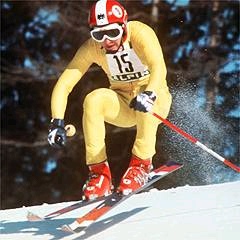
On race day after 14 racers, Bernhard Russi of Switzerland was in the lead. Russi had won the downhill gold at the 1972 Olympics and appeared to have a good time on the Innsbruck course since he led the nearest competitor by more than half a second. Klammer in his yellow speed-suit sprang out of the starting gate and the mostly Austrian crowd of 60,000 began to roar. He was fast, but a couple of mistakes including catching too much air off a bump left him .2 seconds behind Russi’s time two-thirds of the way down the course. All downhillers know that to win you have to take chances and for the last third of that Olympic downhill, Klammer did nothing but take chances. He let the skis run taking the fastest line and just hung on! When he crossed the finish line he beat Russi’s time by .33 seconds to take the gold. That meant that Klammer had made up over a half second in the last third of the course.
I highly recommend watching Klammer’s run on Youtube although I’m guessing you’ll see it as part of the TV coverage of this year’s Olympics!
Many have labeled Klammer’s downhill Olympic win as the greatest downhill run ever – some have even called it the greatest ski race ever! What made it so memorable? Well, for one thing, you didn’t have to be a skier to recognize that Klammer was on the edge of disaster for almost the entire run. The run was one long series of recoveries, but Klammer never backed off! Regardless of the sport, people recognize when an athlete puts it all on-the-line to achieve a win.

Leave a Reply